


REHABILITATION
Sports rehabilitation in Pocatello
Most physical therapy ends at “it doesn’t hurt anymore.” That is where the second half of the work should start.
An athlete who is pain-free at rest is not necessarily an athlete who is ready
Being pain-free at rest is not the same as being able to take a hard cut in the fourth quarter, and the gap between those two is where re-injuries live. Most of the athletes who come back to us for a second injury were discharged from somewhere else the week the pain stopped.
ATLAS Rehabilitation is a physical therapy clinic built to close that gap. The weight room is thirty feet from the treatment table, the same people run both, and nobody gets handed off between them.
You may not need a referral. Idaho is a direct access state, so you can usually see a physical therapist without a doctor’s referral. Whether your insurance will cover it that way is a separate question — check with them, or call us on 208-244-7751 and we will check it for you.
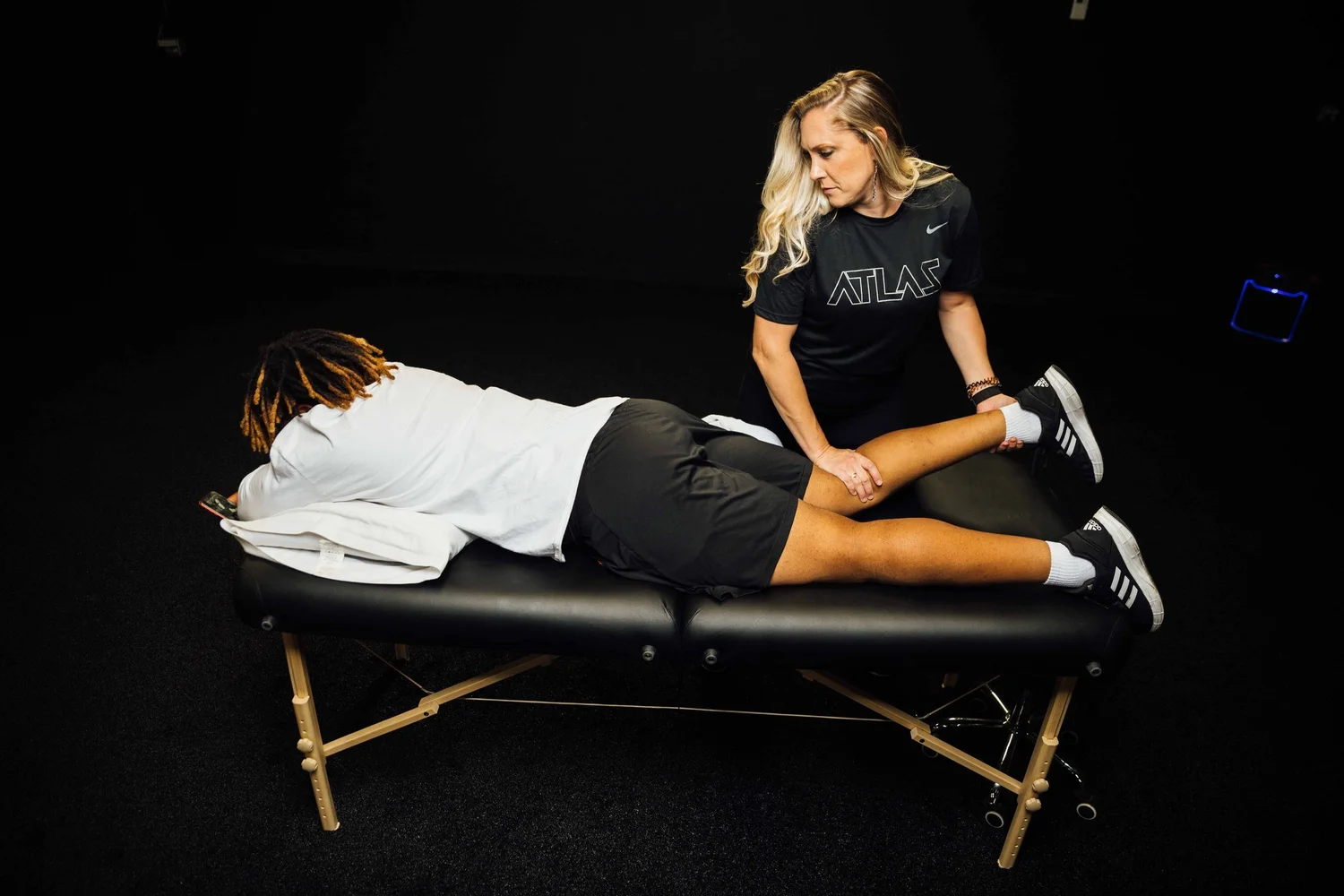
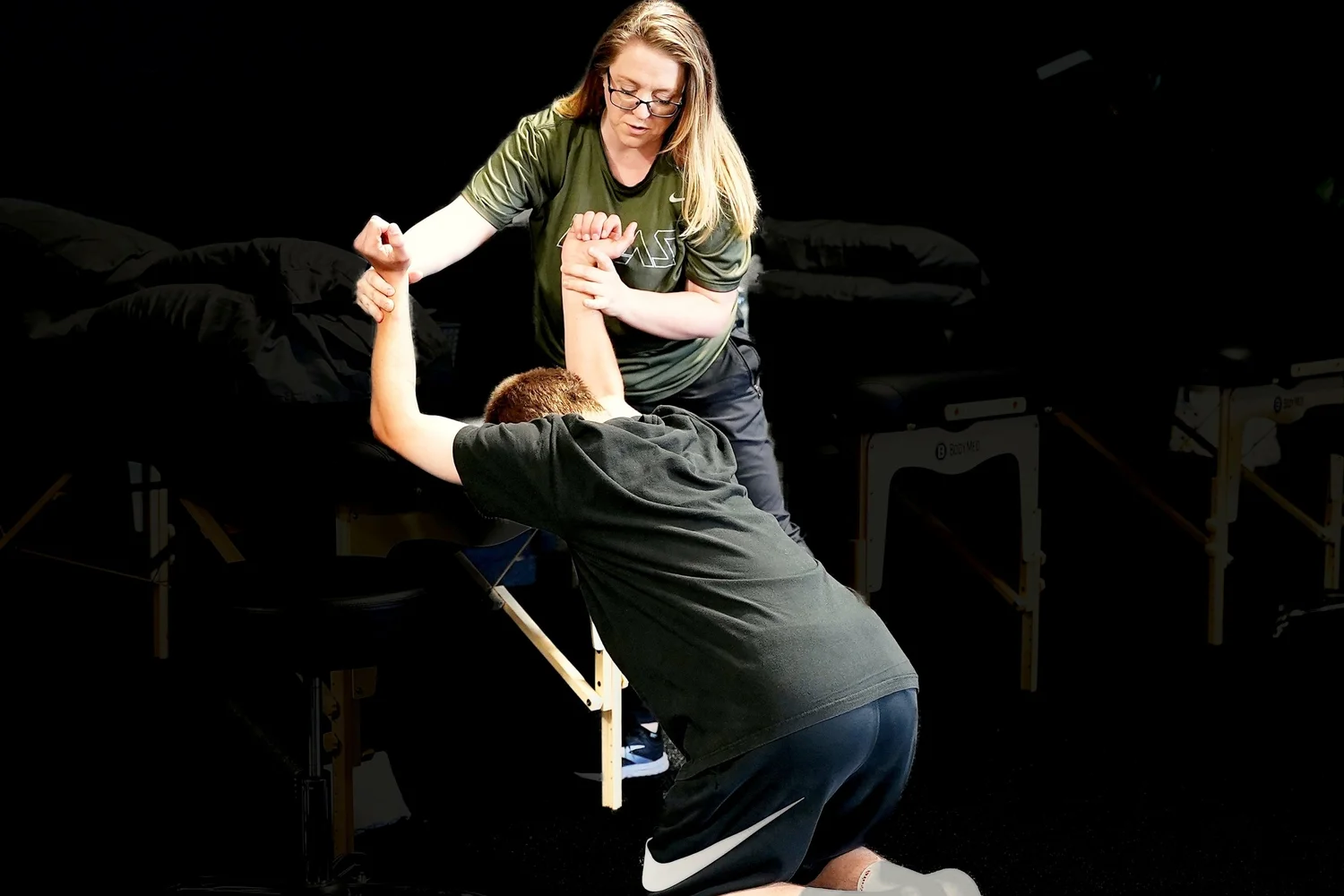
Hands-on skill: how we find joint and soft tissue problems
This is rarer than it should be. Much of the profession has handed the manual work to a tool — scraping, cupping, a percussion gun — or to an aide while the session moves to the next room. We kept it in the therapist’s hands, every visit. Those tools are mostly for people who are not sure what they are feeling.
Who we see
After surgery
Post-operative rehabilitation is a large part of what we do — ACL and other knee reconstructions, shoulders, ankles, hips.
In-season injuries
Including collegiate athletes home for a break who need to keep progressing rather than lose the window.
Pain that has not gone away
The thing that has been managed for months and keeps coming back when the season gets heavy.
Youth and high school athletes
The bulk of the clinic, and the group where getting the second half of rehab right matters most.
Adults who still compete
Masters athletes, lifters, runners — and adults who simply want to keep doing what they do.
Athletes between the two
Cleared to play but not performing like it. Testing usually explains why within the first session.
How it works
Five stages, and you will know which one you are in.
Evaluation and diagnosis
A long conversation first — history, injury history, training history, sleep, workload, school, and what you actually want to get back to. Then hands-on assessment and objective testing. We are trying to find what is driving the problem, not just where it hurts.
A plan you can see
You get the plan and the schedule, and first-rate insurance billing with updates on coverage as soon as your insurance processes it.
Treatment
Skilled manual therapy, dry needling, movement re-training, and one-on-one exercise prescription — one patient, one therapist, the whole session.
Then we load it
This is the part that usually gets skipped. The last phase of rehab is the sport, not the table, so the work gets progressively heavier and faster until it looks like what you are returning to.
Return-to-sport testing
Objective numbers, not a feeling. Biodex isokinetic dynamometry for knee and hip strength, VALD force plates for how much force you produce and absorb on each side, and timing gates for acceleration and top speed. If your left leg produces twelve percent less force than your right, you will see that number, and so will we.
What we use
Biodex isokinetic dynamometry
The clinical standard for knee and hip strength testing, and the measurement most athletes never get. It is the device the return-to-sport research is built on.
VALD force plates
Force production, rate of force development, and absorption — left side against right.
VALD timing gates
Acceleration and top speed, to the hundredth.
Dry needling and manual therapy
Licensed and certified in dry needling.
Spinal manipulation
Who doesn't love a good pop? There is a large body of evidence that spinal manipulation improves pain, mobility, and function. Blaire is certified.
The ARPwave
A direct current device — DC, the same kind of current your own electrical system runs on — that speeds healing and recovery.
The weight room
Thirty feet away, and the reason the last phase of rehab here looks like the sport rather than the table.
Who you will see
Blaire Zikratch, DPT, MSAT
Owner, FounderBS in Biology, 2008. Doctor of Physical Therapy, 2011. Master of Science in Athletic Training, 2016. All from Idaho State. Dry needling licensed and certified, spinal manipulation certified, and Titleist Performance Institute trained.
Kate Youngblood, PTA
Physical Therapist AssistantTrained at Idaho State, class of 2013. She and Blaire have practiced as a team since 2011, which is longer than most clinics have existed.
Start with an evaluation.
Tell us what is going on and we will get back to you as soon as we can.
ATLAS Performance Engineering — performance development and performance therapy engineered together, for one athlete who has committed to a season of work.