
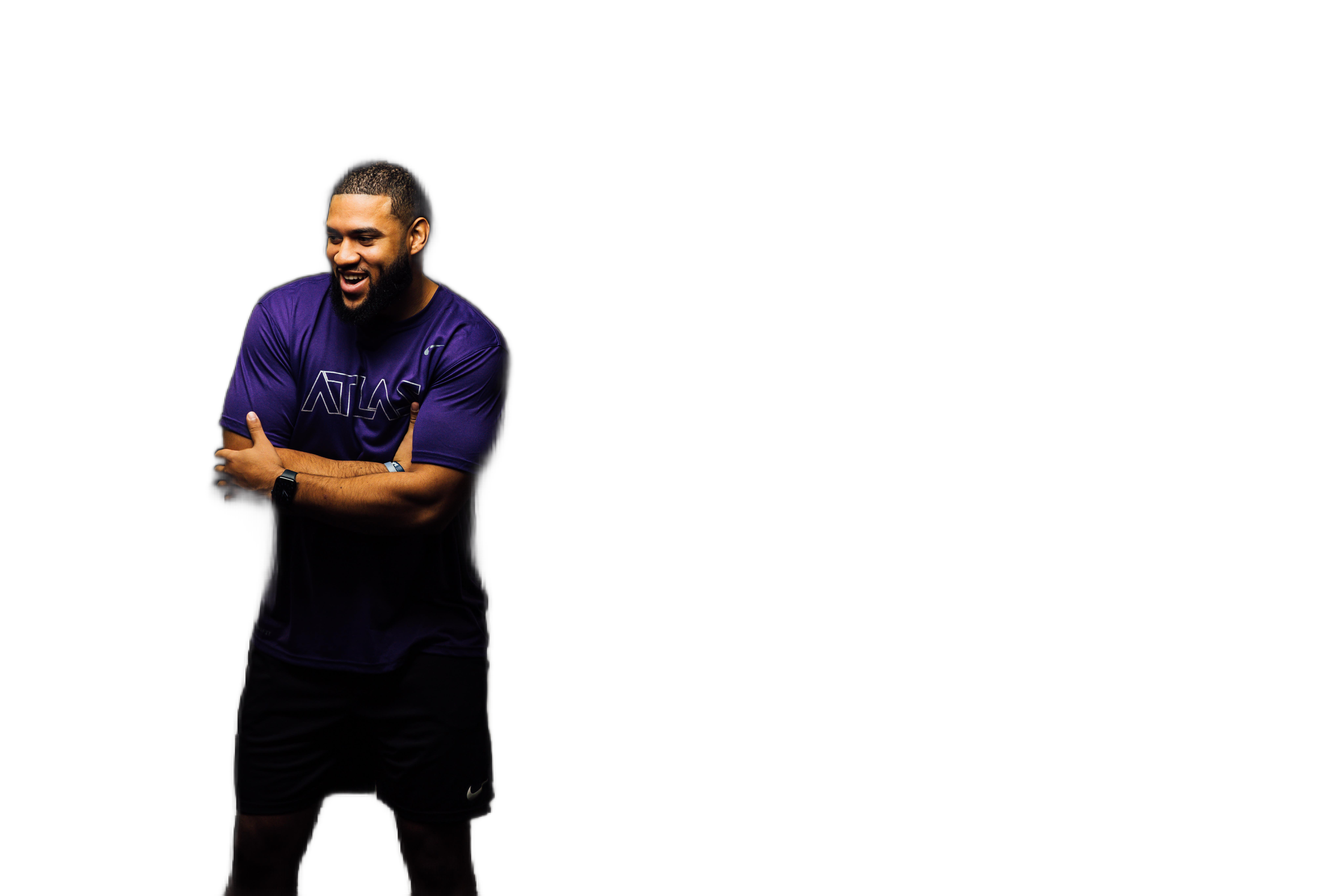

PERFORMANCE
Athlete performance and speed training in Pocatello
The same system the professional athletes who train here are on, scaled to the athlete in front of us — not simplified.
The program comes first. The numbers tell us what’s working.
Athletes are retested on a schedule and shown their own numbers. An athlete who can see where they actually stand does not need to be sold on the next eight weeks of work — and an athlete whose left leg produces twelve percent less force than the right would never have found that out by feel.
That is the difference between training and working out. Both of them make you tired.
The Program
The plan is written against the athlete, not against a template. It gets adjusted as the numbers move, and it accounts for the athlete’s actual week — school, practice, games, sleep, and the other sport they are also playing.
Training sits in the same building as the clinic, and the coaching side and the clinical side talk constantly. Things get adjusted before they become injuries, and an athlete who does pick up an injury does not leave to rehabilitate it somewhere else.
Thirty feet separates the rack from the treatment table — and the athlete never feels the seam.

What we measure
What each number is for.
VALD force plates
How much force you produce, how fast you produce it, and how well you absorb it — left side against right. Asymmetry is the number that predicts the next injury.
VALD timing gates
Acceleration and top speed, to the hundredth. Split times tell you whether an athlete is slow or just slow out of the first two steps, and those are different problems.
Sprint and change-of-direction mechanics
Coached, on film and on the track, rather than left to conditioning. Running fast is a skill, and it is trainable.
The ZtreadZ
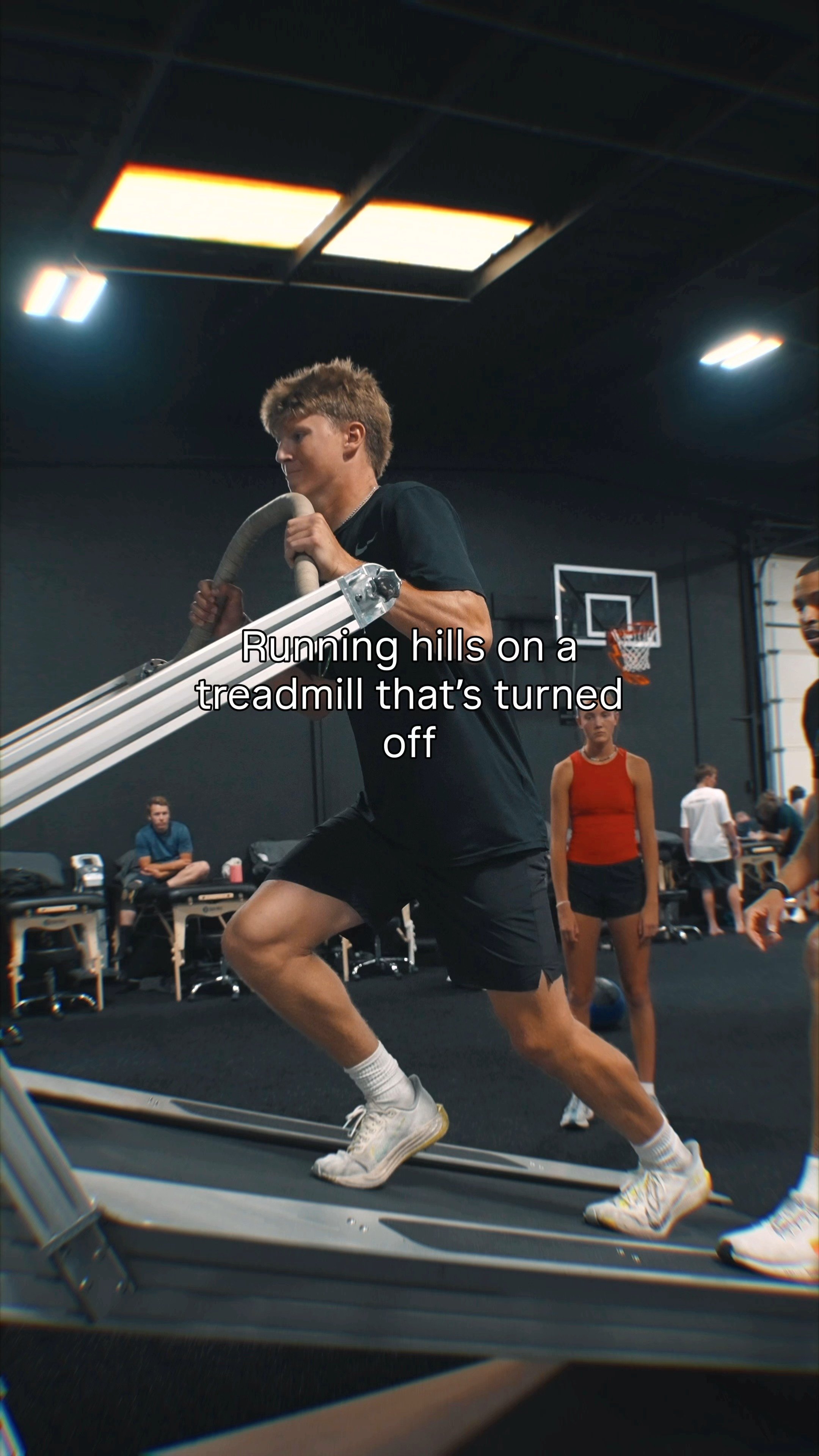
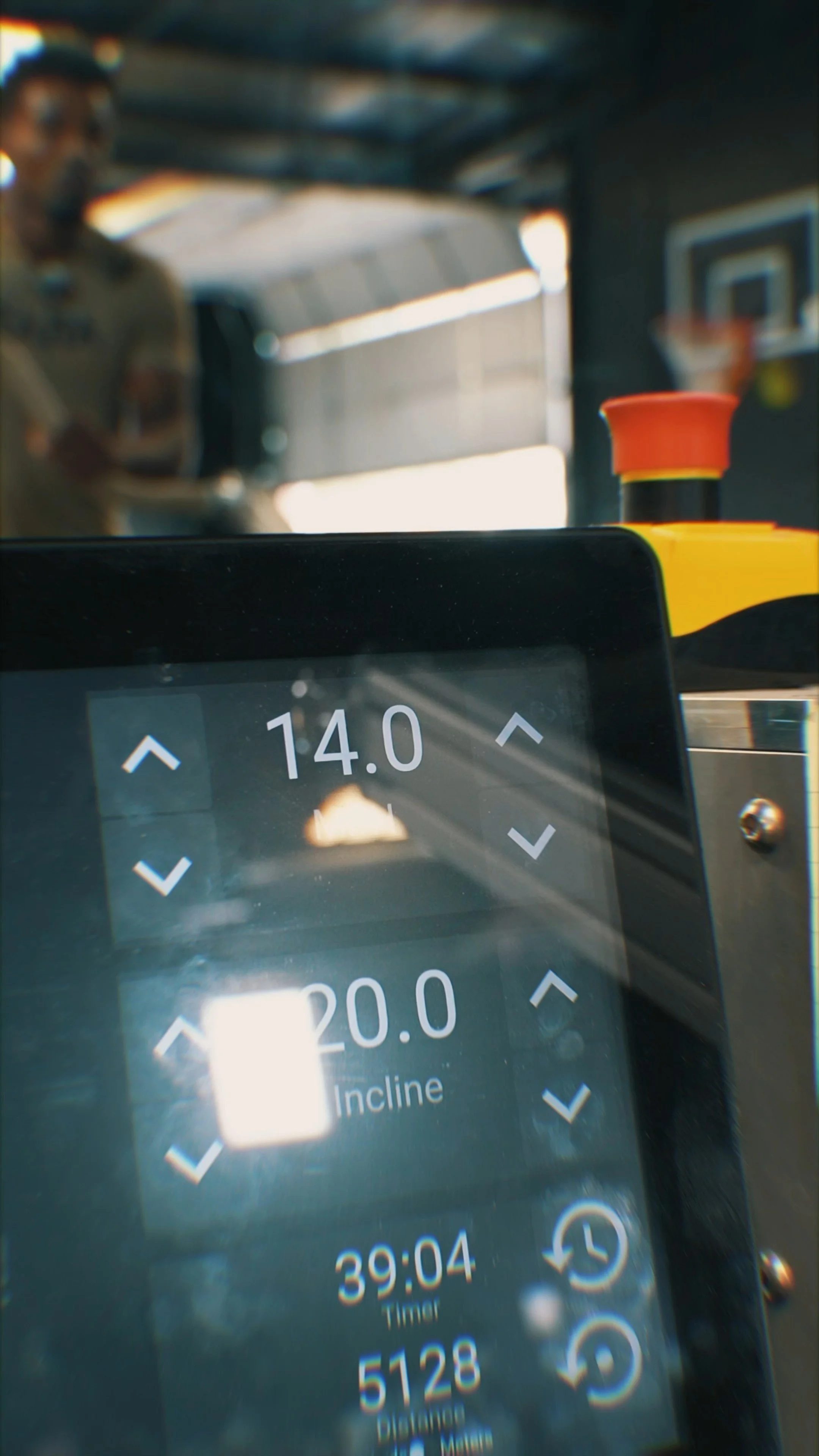
A treadmill that inclines to forty percent, runs its belt backward, and takes a sled push on the same platform, with gait sensors sampling a thousand times a second. We bought the first one they built.
Vitruve velocity-based training
Bar speed on every working rep, read live by the athlete on an iPad. The right load today is not the right load two days ago, and training with intent requires precision in both speed and load. It is also the rare number an athlete can chase set to set, so the readout does some of the coaching.
Who trains here
Middle and high school
In and out of season. The bulk of who is in the building on a given afternoon.
Collegiate athletes
Home for breaks and needing the window to count for something.
Professional athletes
Offseason builds and in-season maintenance.
Adults who still compete
And adults who want to keep being able to.
Younger athletes from about ten, depending more on the athlete than on the birthday. Call and we will tell you honestly whether it is time.
The coaches
Kennon Smith
Founding Director of PerformanceA BS in Psychology and a BA in Sports Management, and currently completing a Masters in Performance through ALTIS. EXOS Performance Specialist, with ALTIS coursework in foundations, short sprints, horizontal jumps and speed.
Treyshon Malone
Assistant Performance CoachA professional long jumper, competing at national level nearly every season of his career, and a BA in Sociology & Criminology. He coaches here between competitions.
What real training looks like
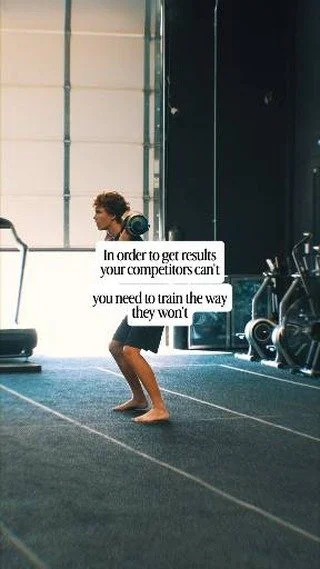
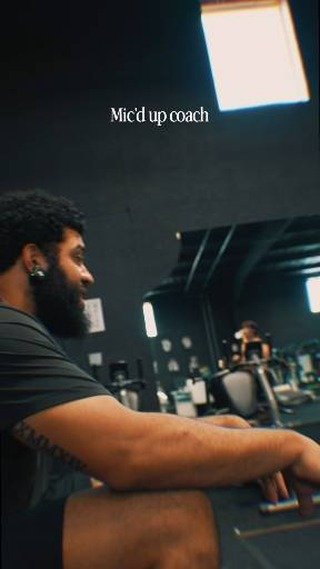
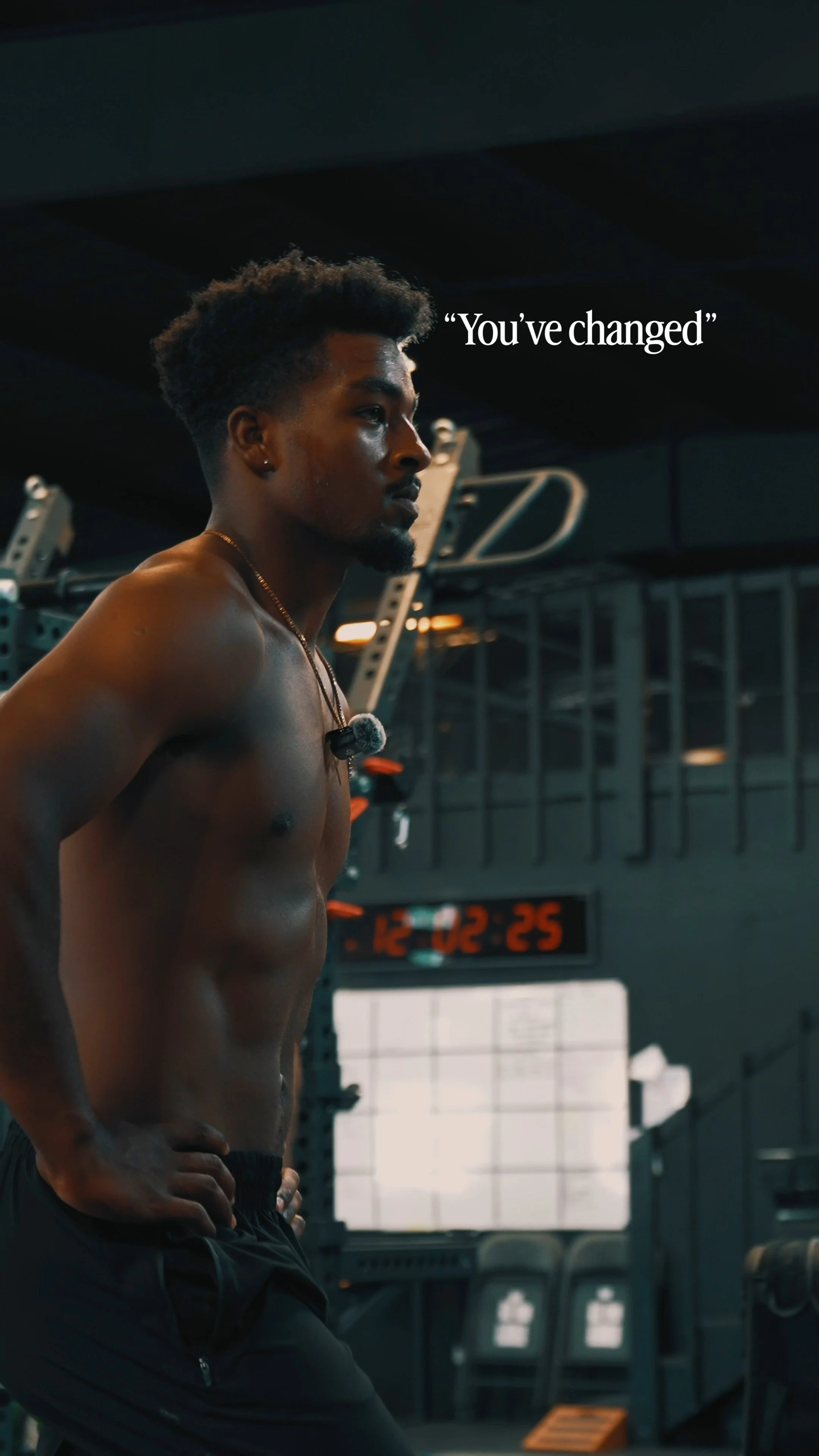
New clips most weeks — lifts, sprint work, return-to-sport testing. Tap any one to play it here.
ATLAS Performance Engineering — performance development and performance therapy engineered together, for one athlete who has committed to a season of work.





Start with an Evaluation
A conversation and a baseline, so there is something to measure against later. Tell us what the athlete plays and what they are chasing.
What parents ask us
Is lifting safe for a thirteen-year-old?
Supervised, loaded appropriately and coached on technique, yes — and it is one of the better things a young athlete can do for injury risk. What is not safe is a teenager copying a program off the internet in a garage. The coaching is the safety.
Will this interfere with their season?
It is written around the season, not on top of it. In-season training is lighter, shorter and aimed at keeping what was built in the offseason while they are playing two or three times a week.
How often do they need to come in?
Usually two to four sessions a week, depending on the sport, the time of year and what else is on their calendar. We would rather set a number you can actually keep than a number that looks serious.
What if they get hurt?
They walk thirty feet and see a physical therapist, and the coach who writes their training is in the same conversation. Nothing starts over, and nobody has to explain the history twice.
Do you only take serious athletes?
No. Plenty of athletes here are not going to play in college and are not pretending to. The testing and the coaching are the same either way.